Insights
Intelligence That Informs
Decision-Makers
Practical analyses on the trends, challenges, and developments shaping enterprise data and AI — designed to inform, not thought-leadership pieces designed to impress.
Free Resource
Get New Insights First
We send one practical analysis per month. No noise.
Subscribe →POPIA compliant · Unsubscribe anytime
Featured Article
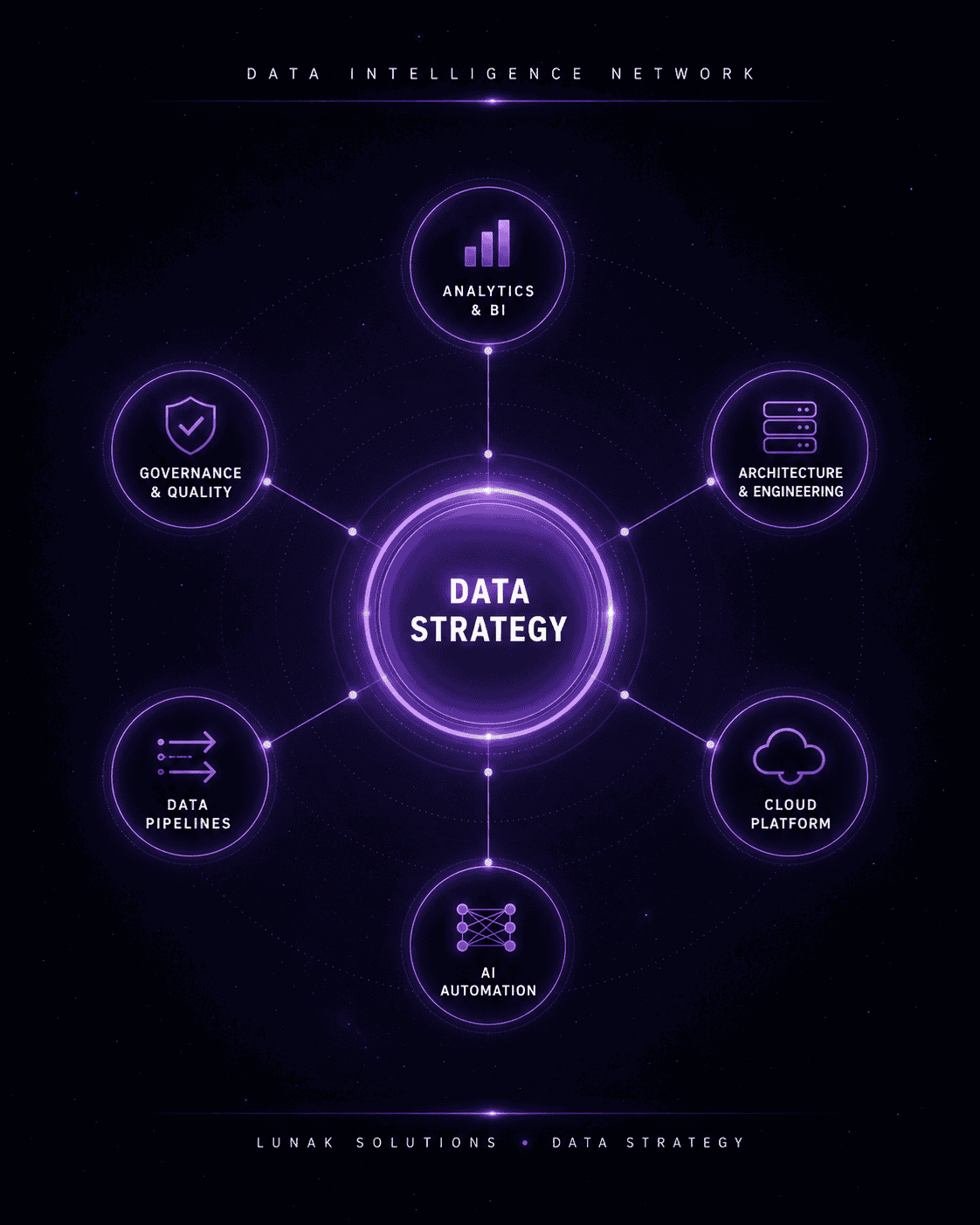
Why Your Data Strategy Is Failing Before It Starts
The majority of enterprise data strategies are well-intentioned, extensively documented, and largely ignored within twelve months of approval. The reason is rarely a technology failure. It is an alignment failure.
When data strategy is owned by IT rather than co-created with business leadership, it defaults to a technology procurement exercise. When it is built without an honest assessment of data quality, it is built on sand. When it does not have a named executive accountable for outcomes, it becomes a presentation in a shared drive.
The organisations that get data strategy right treat it as exactly what it is: a business strategy that happens to be about data. It starts with the decisions the business needs to make better, works backwards to the data required to make them, and establishes the infrastructure, governance, and capabilities needed to make that data accessible, reliable, and trusted.
At Lunak Solutions, our strategy engagements begin with one deceptively simple question: what decisions, if made faster and with more confidence, would have the greatest impact on your commercial performance? The answer to that question determines everything that follows.
More Articles
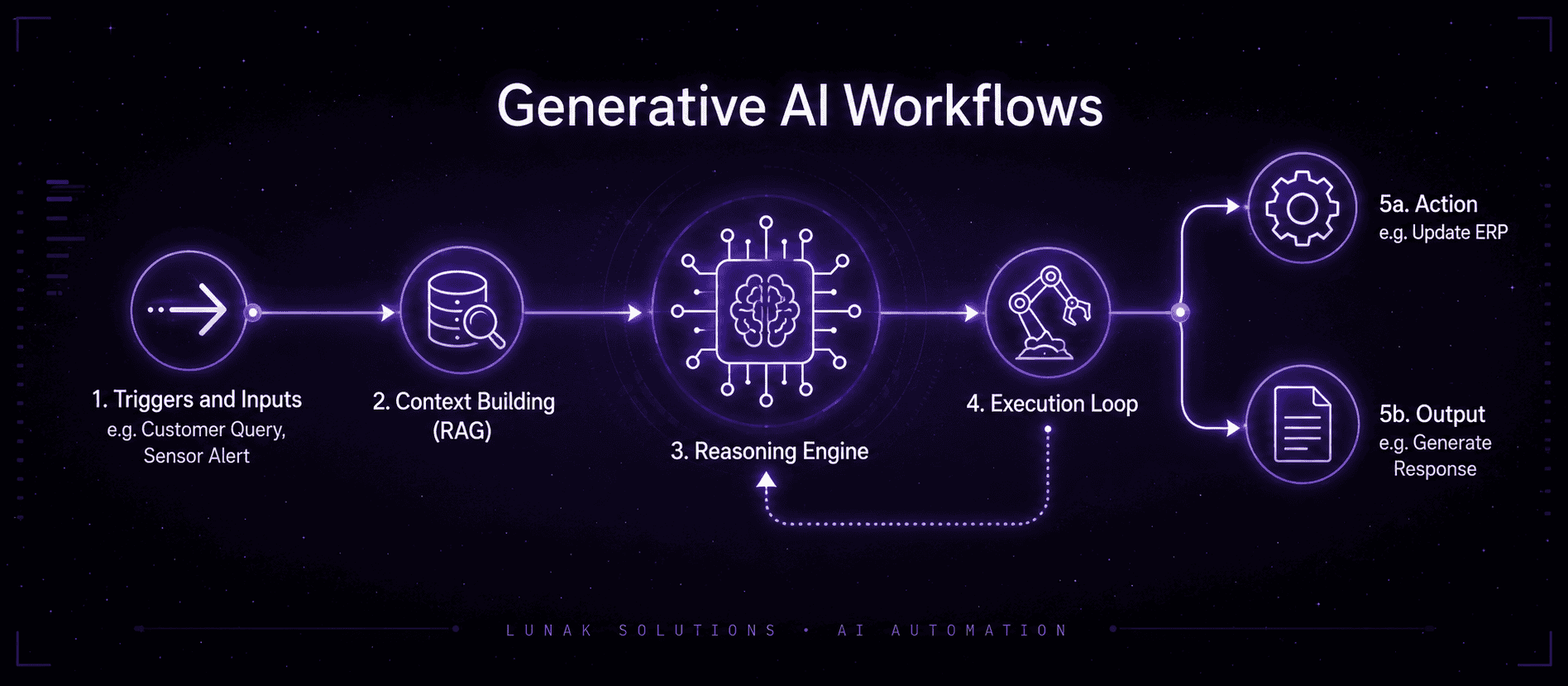
The Enterprise AI Reality Check: What Works, What Does Not, and What Comes Next
Organisations have been promised transformative AI capabilities for years. Many have invested heavily. Fewer have realised returns at scale. The gap between AI ambition and AI value is not a technology problem — it is a readiness problem.
The enterprises extracting real value from AI share a common characteristic: they started with their data. AI models are only as good as the data they are trained on, and data in most enterprise environments is fragmented, inconsistently governed, and poorly documented. The path to enterprise AI that delivers is methodical.
Discuss with our team →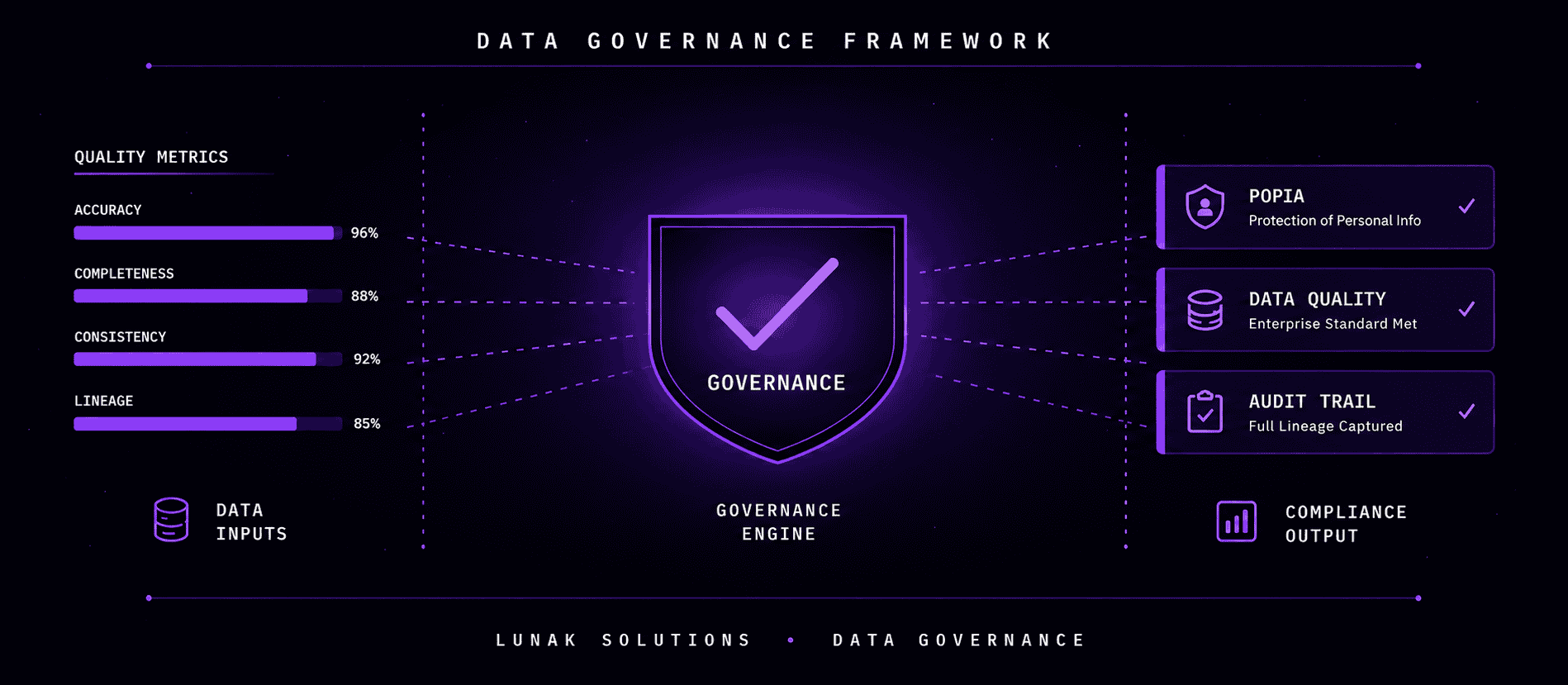
Data Governance Is Not a Compliance Exercise. It Is a Competitive Advantage.
The word 'governance' triggers a particular kind of organisational fatigue. It carries connotations of documentation burdens, compliance obligations, and bureaucratic process. As a result, it is one of the most chronically underfunded capabilities in the enterprise data stack.
Organisations with mature data governance move faster, not slower. They trust their data more, which means they debate it less. They can respond to regulatory change without scrambling. Data governance done well is invisible to most of the organisation — it simply means that when someone needs data, it is there, it is right, and they know what it means.
Discuss with our team →Coming Soon
Upcoming Topics
Subscribe above to be notified when new articles publish.
Five Signs Your Data Architecture Cannot Scale With Your Business
Cloud Data Platforms Compared: Choosing the Right Foundation for Enterprise AI
How Predictive Analytics Is Reshaping Financial Risk Management
The True Cost of Poor Data Quality: A Framework for Quantifying the Impact
From Pilot to Production: Why Most AI Projects Stall and How to Ensure Yours Does Not
Building a Data-Literate Organisation: The Role of Leadership in Cultural Change
What a Modern Data Governance Framework Actually Looks Like in Practice
The Case for a Managed Data Service: When Building In-House Is Not the Answer
Turn insight into action
Our insights go directly to decision-makers at enterprise organisations. If you are ready to discuss applying any of these ideas to your environment, we would like to hear from you.
Book a Free Strategy Call →